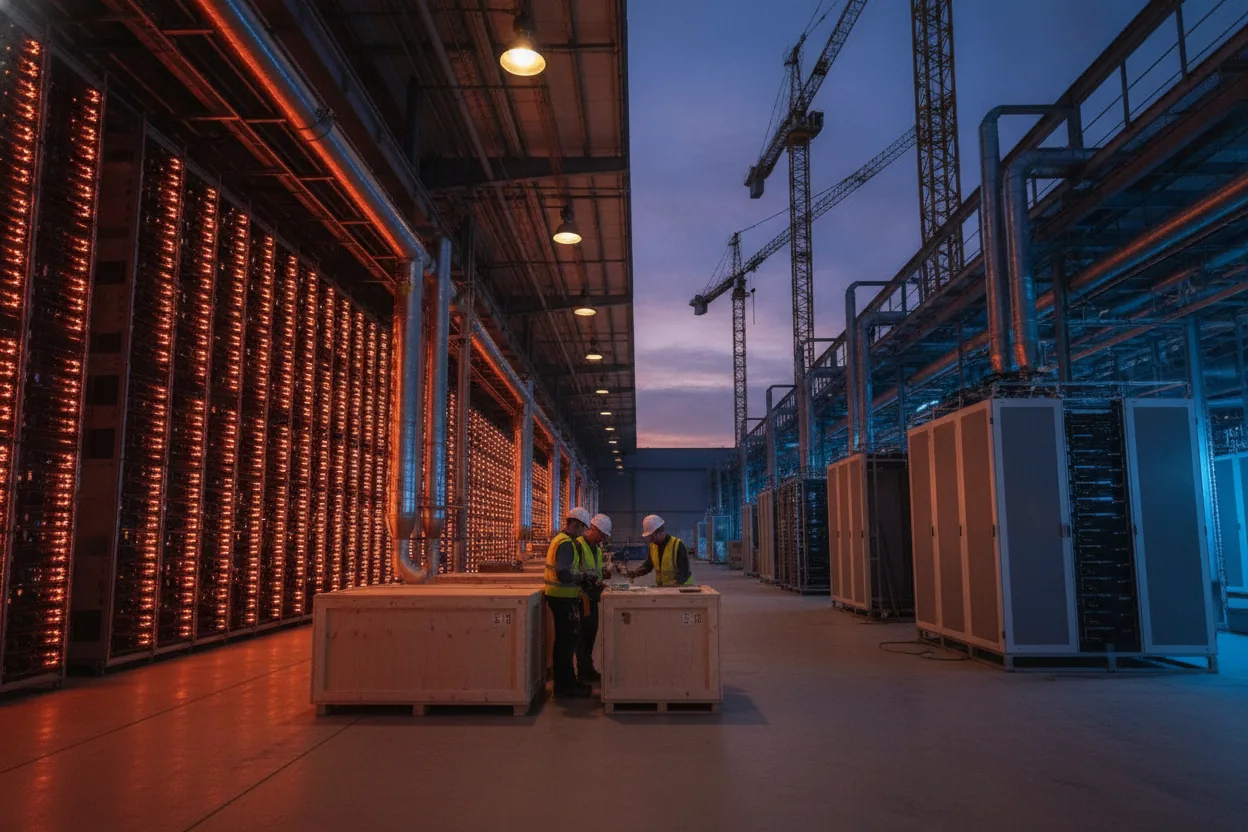
Public bitcoin miners spent years telling investors to value them by the size of their balance sheet bitcoin holdings. Now those same companies are selling that bitcoin to build AI data centers. The pitch was designed by mining executives for shareholders who wanted exposure to bitcoin's price appreciation, not GPU leasing contracts. ASICs run 24 hours a day no matter what, while AI inference revenue tracks business hours and craters overnight. So why are miners betting capital on a workload with that kind of idle-time risk instead of doubling down on the one built for constant draw? It comes down to which use pulls more revenue per megawatt, and that comparison is where the rest of this piece starts.
The old model was simple. Mine bitcoin, hold it, borrow against it or sell small slices to fund ASIC upgrades when network difficulty jumped after a halving. That worked fine when bitcoin's price gains outran the cost of electricity and chip depreciation by a wide enough margin to keep shareholders happy. It stopped working as cleanly once hyperscalers started dangling long-term lease contracts worth more per megawatt than mining bitcoin could ever generate on the same footprint. Miners aren't abandoning bitcoin here. They're figuring out which use squeezes more value out of a finite set of resources: electricity, land, and grid interconnection capacity that can take years to secure.
Compare Bitcoin Mining Economics To AI Data Center Hosting
Workload Demand Intensity by Hour: AI Inference vs Bitcoin Mining
Demand Level Across a 24 Hour Cycle
| Time Block | AI Inference Demand | Bitcoin Mining Demand |
| Night (12am to 6am) | Low | High |
| Morning (6am to 12pm) | Rising | High |
| Afternoon (12pm to 6pm) | Peak | High |
| Evening (6pm to 12am) | Falling | High |
ASICs maintain constant draw regardless of time, while AI inference query volume tracks human business hours and drops overnight, creating the idle capital risk that hybrid models aim to solve.
Source: Source: Article analysis of industry hybrid data center modeling
Start with the input both activities share: electricity. Wholesale power has traded in a wide range depending on region and season, and that number is the common denominator for any real comparison between bitcoin mining and AI inference hosting. Give a data center operator a fixed amount of power and ask which use generates more revenue per megawatt, and the answer increasingly favors AI compute, particularly inference work done for enterprise and consumer AI products during business hours.
Bitcoin mining has one structural advantage AI inference doesn't: it runs continuously, since ASICs keep grinding regardless of demand cycles. They don't care if it's 3am on a Sunday. AI inference demand tracks human activity instead. Query volume for consumer and enterprise AI tools spikes during business hours across whichever time zones a company serves, then drops overnight. A GPU cluster sitting idle at 2am is burning capital without making a dime, which is the last thing a hyperscaler or neocloud operator wants from a nine-figure infrastructure buildout.
This mismatch, continuous ASIC uptime against inference demand that drops overnight, is exactly why the hybrid model exists. Industry modeling has laid out scenarios where the same data center footprint handles AI inference during peak daytime hours and shifts to bitcoin mining overnight when inference demand craters. The logic is simple: instead of letting expensive power sit unused at 3am, point it at ASICs that will take whatever electricity is available and convert it into bitcoin at whatever the network's current difficulty allows. These models generally weigh current GPU and ASIC pricing against prevailing wholesale power rates to figure out which workload produces more dollars per unit of power, assuming each activity runs the most efficient chips available for its task.
The practical result: operators don't have to pick one identity. A facility can be both an AI host and a bitcoin miner depending on the hour, provided the underlying power contracts and grid connections support that kind of flexible load. That flexibility is itself becoming a selling point to utilities and grid operators, who increasingly favor large loads that can be curtailed or shifted over loads that demand constant, inflexible draw. Anyone evaluating a specific miner should check whether its existing sites have power purchase agreements flexible enough to support this, and whether its GPU fleet is modern enough to compete for inference contracts in the first place.
Track The Capital Reallocation From Bitcoin To AI Compute
The Hybrid Data Center Switching Model
How One Facility Serves Two Workloads
Step 1: Daytime Hours
Power routed to GPUs for AI inference, serving enterprise and consumer query spikes during business hours
Step 2: Demand Drop Detected
Inference query volume craters overnight, leaving GPU capacity underutilized and power at risk of sitting idle
Step 3: Overnight Hours
Same power and footprint redirected to ASICs, which take whatever electricity is available and convert it into bitcoin
Step 4: Morning Reset
Cycle repeats, provided power purchase agreements and grid interconnections support this flexible, curtailable load
Source: Source: Article description of industry hybrid operator modeling
If the hybrid model explains how a single site can serve both workloads, the next question is why companies are selling bitcoin outright rather than just bolting GPUs onto their existing ASICs. That answer shows up in the numbers, not the press releases. Selling bitcoin to fund an AI pivot is a capital allocation decision, and capital allocation decisions reveal what management actually believes about relative returns, whatever the investor deck says. When a miner liquidates BTC off its balance sheet to pour into GPU purchases, land acquisition, and grid interconnection fees, it's making a statement: the expected return on AI infrastructure, adjusted for risk and timeline, beats the expected return on holding bitcoin and waiting.
That statement holds up given current contract structures. AI compute deals, especially multi-year lease agreements with hyperscalers or inference-heavy startups, tend to offer locked-in revenue streams with contracted rates. Bitcoin mining revenue is a function of network difficulty, block rewards that get cut in half roughly every four years, and a spot price that can swing hard within months. One revenue stream is contractual and predictable. The other is probabilistic and volatile. Public miners answer to quarterly earnings calls, and predictable revenue is just easier to explain to shareholders than a bet on where bitcoin trades next year.
There's also a financing angle that gets less attention than it deserves. ASIC fleets depreciate fast, both technologically and financially, because mining efficiency gains mean last-generation hardware goes uncompetitive within a few years. GPU clusters depreciate too, but they currently attract financing on better terms because lenders and equity investors view AI infrastructure as a growth category with a longer runway than bitcoin mining, which is a mature, winner-take-all efficiency race at this point. Miners pivoting to AI aren't just chasing better unit economics. They're chasing access to capital markets that are, right now, far more generous to anything labeled AI infrastructure than to anything labeled crypto mining. That labeling distinction matters more to institutional allocators than it probably should on pure fundamentals.
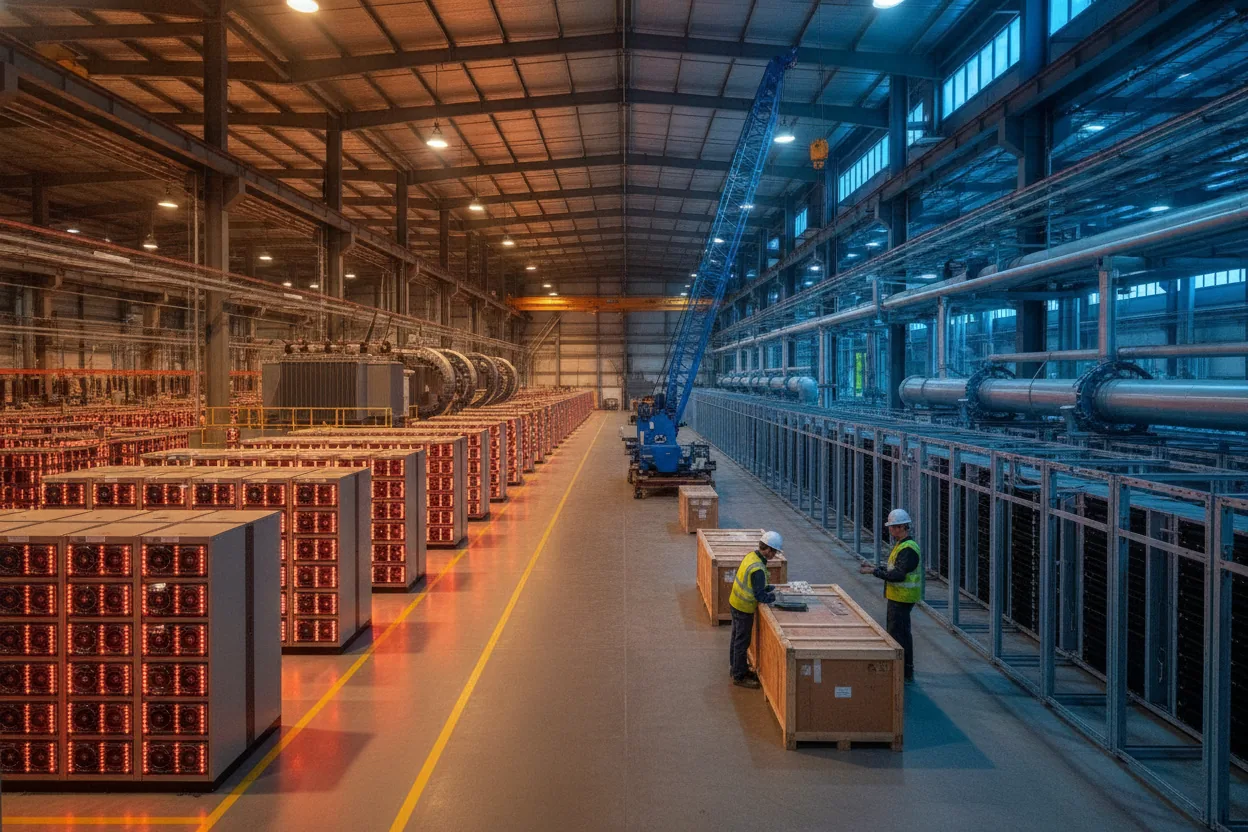
None of this means bitcoin mining goes unprofitable or disappears. It means the marginal dollar of new capital spending increasingly flows toward compute that serves AI workloads, with bitcoin mining relegated to filling overnight gaps that compute would otherwise leave idle. Anyone tracking these stocks should weigh a company's power contracts and site locations as the real signal of its AI hosting prospects. That's where the valuation multiple expansion is actually coming from, not the size of its bitcoin treasury.
Weigh What The AI Pivot Signals About Energy And Infrastructure
The capital reallocation above didn't happen in a vacuum. It was possible because miners already controlled the one input both industries fight over: electricity. The deeper story here is about energy and infrastructure, not bitcoin or AI specifically. Both industries are, at their core, bidding wars for the same scarce inputs: cheap power, available land, and grid interconnection slots that can take forever to secure in constrained regions, including parts of Texas, Virginia, and the Pacific Northwest. Bitcoin miners spent the last decade snapping up exactly those assets, often in rural or deregulated power markets where electricity was cheap precisely because demand was low. That positioning, built for an entirely different purpose, turned out to be unexpectedly valuable once AI compute demand exploded and hyperscalers started scrambling for any site with spare megawatts.
This is the quiet asymmetry in the pivot story. Miners didn't build their infrastructure anticipating an AI boom. They built it to mine bitcoin cheaply, prioritizing power cost over almost everything else. But cheap power with existing grid connections is now one of the scarcest resources in American infrastructure, and miners happen to be sitting on a lot of it. That's less a story about strategic foresight and more a story about optionality: assets bought for one purpose turning out to have a second, more lucrative use once market conditions shifted underneath them.
Quarterly bitcoin holdings matter less than they used to as a gauge of a miner's prospects. What matters more is the megawatt capacity under contract, the quality of those power agreements, and whether the company has actual signed deals with AI hosting customers rather than just an announced intention to pivot. Plenty of companies have announced AI ambitions in press releases. Fewer have locked down the GPU allocations, the interconnection capacity, and the hyperscaler contracts needed to actually monetize that ambition at scale. That gap between announcement and execution is where most of the valuation risk sits.
There's also a fair question about how long this arbitrage lasts. If every mining company with spare power capacity pivots toward AI hosting at once, the premium currently available for that dual-use flexibility compresses, the same way any arbitrage compresses once enough capital piles in. Energy prices aren't static either. A surge in AI-driven demand for electricity, stacked on top of mining demand, could push wholesale prices meaningfully higher than today's baselines, which would reshuffle the relative economics of both activities in ways that are genuinely hard to call from here. Investors weighing a position in any miner pursuing this strategy should treat the current favorable spread as temporary, not structural, and size their expectations for the next two or three years of earnings accordingly.
That answers the question posed at the start: miners aren't walking away from bitcoin because mining stopped working. They're shifting power and capital toward the workload that currently pays more per megawatt, while keeping ASICs running in the hours AI demand can't fill. The bitcoin treasury was never what made these companies valuable. The power contracts and grid interconnections underneath it were, and those are the numbers worth watching as this pivot plays out.
This article is for informational and educational purposes only and does not constitute financial, investment, legal, or insurance advice. The views expressed are analytical observations and should not be relied upon for personal financial decisions. Always consult a qualified financial advisor before making investment or insurance decisions.