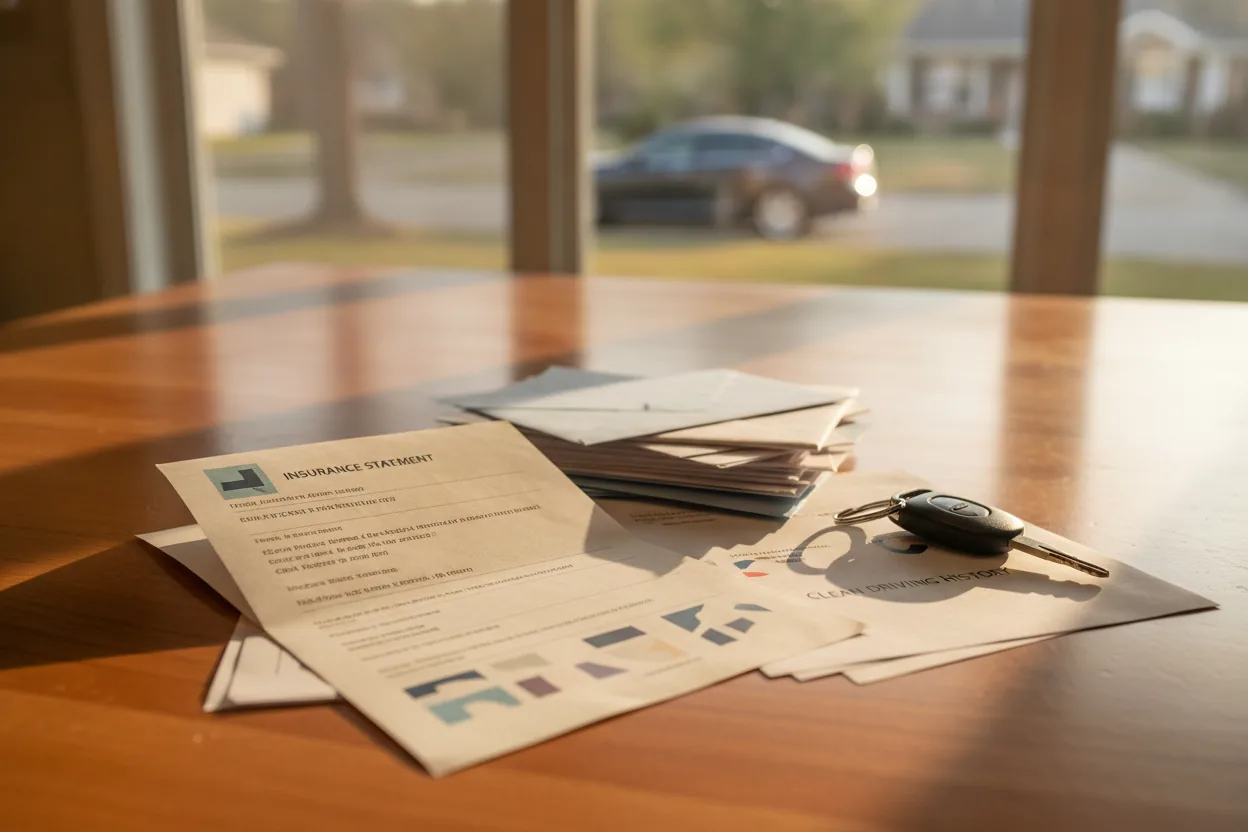
Plenty of clean record drivers have watched their premium climb since 2024, and it makes no sense on the surface. No accidents. No tickets. Didn't move. State regulators require insurers to stay solvent, and insurers set rates with that mandate in mind, which is how a driver with a decade of safe driving ends up footing part of the bill for a bumper's radar calibration and a Houston zip code's flood risk, simultaneously, on the same policy. A clean record and a rising bill sit side by side. Why does that gap exist, and what can a driver with no claims and no tickets actually do about it?
Insurers didn't just wake up and decide to charge more. A handful of cost inputs rose at once, hit an industry that regulators require to stay roughly solvent, and got passed through to policyholders on a lag. The mechanism matters more than the headline percentage, since that number will keep shifting. Three things are worth pulling apart here: repair costs, geography, and claim severity. Each explains a slice of the bill. Together, they explain why a clean record doesn't shield a driver from a rate hike the way it used to.
Are Repair Costs The Real Reason Car Insurance Premiums Rose?
How Rising Costs Turn Into Your Premium Increase
Source: Based on article narrative, "Why Did Car Insurance Rates Go Up So Much in 2026?"
The easy assumption is that insurance went up because accidents went up. Only part of that is true. The bigger driver is what a single accident now costs to fix, and that number has shifted quietly over the last five years, usually registering with drivers only after their own fender bender bill shows up.
A 2015 Honda Civic bumper is plastic and foam. A 2024 Honda Civic bumper is a sensor housing with a radar unit tucked behind it, calibrated to a camera near the rearview mirror, feeding a lane departure system that needs recalibration by a technician with specific software after any body work. Replace that bumper and the bill isn't for plastic anymore. It's parts still tangled up in supply chains that never fully normalized after 2021, labor from ADAS calibration technicians who are still in short supply, and diagnostic time that didn't exist as a line item a decade ago.
Insurers price comprehensive and collision coverage around loss severity, the average dollar amount paid per claim, not just how often claims happen. When loss severity climbs because every claim now involves calibration and sensor replacement, insurers face two choices under state rate regulation: file for a rate increase with documented justification, or absorb a widening gap between premiums collected and claims paid. Public rate filings with state insurance departments over the past two years show the first option winning in most markets.
A driver in a vehicle built after roughly 2019 with factory installed driver assistance features is paying a collision and comprehensive premium that already prices in repair costs that have nothing to do with their driving record. If you're carrying comprehensive coverage on an older, paid off vehicle, check whether the car's current value still justifies those built-in repair costs. Dropping that coverage is one of the few places you actually get to pull a lever here.
Does Where You Live Really Change Your Car Insurance Rate?
What a Bumper Repair Bill Actually Covers Now
|
2015 Honda Civic Bumper
Plastic + Foam
No sensors, no calibration, simple repair
|
2024 Honda Civic Bumper
3 Cost Layers
Radar unit + ADAS labor + diagnostic time
|
Source: Based on article narrative, "Why Did Car Insurance Rates Go Up So Much in 2026?"
Repair cost explains why the payout per claim has climbed regardless of location. But claims don't happen at the same rate everywhere, and that's the second input. Drivers assume their rate mostly reflects their own history: tickets, accidents, credit tier, years licensed. True, at the margin. But geography is doing more work in your premium than most people realize, and 2026 is the year that became impossible to ignore.
NOAA counting more than 20 billion dollar weather disasters in a single year isn't just a climate statistic sitting in a report somewhere. Each of those events triggers a wave of comprehensive claims, since comprehensive coverage, not collision, is what pays out when a vehicle gets hit by flooding, hail, wind driven debris, or wildfire. Insurers price comprehensive coverage at the zip code level using catastrophe models built on flood plain data, wildfire interface mapping, and hurricane exposure. A driver in a Houston zip code that flooded in 2024 now sits in a different actuarial bucket than they did in 2019, whether or not their own car ever touched water.
Florida, Texas, California, and the Gulf Coast states show this most clearly, but it's spreading. Several insurers have pulled back from writing new auto and property policies entirely in the highest risk counties, a pattern already familiar from the homeowners market. When carriers exit a region, the ones left behind face less competitive pressure on pricing, and the state assigned risk pool, the insurer of last resort most states maintain, ends up covering a larger share of the market. That pool is priced higher by design. It exists to take on drivers that standard insurers won't.

Two drivers with identical records and identical cars can pay meaningfully different premiums depending on which side of a county line they live on, and that gap has widened since 2024. If you're renewing a policy this year, ask your insurer how your specific zip code, not just your state, is rated. That detail explains more of the bill than it did five years ago.
Is It Really About Accidents, Or Something Else Driving Up Insurance?
Three Forces Driving Up Your Premium
| Cost Driver | What Changed | Coverage Affected |
|---|---|---|
| Repair Costs | ADAS sensors, radar calibration, diagnostics added since 2019 | Collision, Comprehensive |
| Geography | 20+ billion dollar weather disasters priced at zip code level | Comprehensive |
| Claim Severity | Average payout per claim rising, not just claim frequency | Collision, Comprehensive |
Source: Based on article narrative, "Why Did Car Insurance Rates Go Up So Much in 2026?"
Repair costs explain the per claim payout. Geography explains why claim frequency and exposure differ by location. What's left is whether driving behavior itself, how often accidents happen, is really behind the increase. The surface narrative says Americans started driving worse after the pandemic, full stop, that explains the premium hike. There's truth in the first half. Distracted driving and severe injury crashes do appear to have become more common in the years following 2021. But frequency, how often claims happen, is only half the pricing equation, and it's not the half that moved the most.
Severity is the bigger story, and it piles right on top of the repair cost problem. A crash today is more likely to total a vehicle outright, because repairing a car loaded with electronics now frequently blows past the threshold insurers use to declare a total loss, typically somewhere between 60 and 80 percent of the vehicle's value depending on the state. More total losses mean insurers pay out full vehicle values more often, and used vehicle prices, which determine those payouts, have stayed elevated relative to pre 2020 levels even as new car prices have cooled a bit.
Medical cost inflation stacks on top of that for bodily injury liability coverage. Hospital pricing for trauma care, which is what a serious accident usually involves, has been climbing for a decade, and that cost shows up in liability premiums with a year or two lag, since insurers price off claims data that takes time to mature. A driver who hasn't caused an accident in ten years is still paying for the fact that their liability coverage would need to cover a hospital bill priced at 2026 rates, not 2016 rates.
None of this sits still. Rate filings are public in most states, and comparing what carriers are requesting now against two years ago shows which input, repair cost, medical cost, or catastrophe exposure, is pushing a specific insurer's increase. Shopping renewal quotes with that in mind, instead of assuming every carrier is repricing the same risks at the same speed, is where a driver actually has leverage. Different insurers carry different exposure to each of these three cost drivers depending on their regional footprint and underwriting mix.
The clean record driver paying more in 2026 isn't being penalized for anything they did. The gap between their driving history and their bill comes down to a bumper that now needs radar recalibration, a zip code sitting in a different catastrophe bucket than it did five years ago, and a liability limit priced against hospital costs that moved while their driving record stayed exactly flat. None of those three inputs is reversing on its own. The only variables a driver actually controls: whether comprehensive coverage still makes sense on an older paid off car, whether their insurer's zip code rating reflects outdated exposure, and whether a competing carrier carries less exposure to whatever's driving their current premium up. That's where the leverage sits, not in a driving record that was never the real problem to begin with.
This article is for informational and educational purposes only and does not constitute financial, investment, legal, or insurance advice. The views expressed are analytical observations and should not be relied upon for personal financial decisions. Always consult a qualified financial advisor before making investment or insurance decisions.