Student Loans: The $1.7 Trillion Debt Market Shaping American Consumer Finance
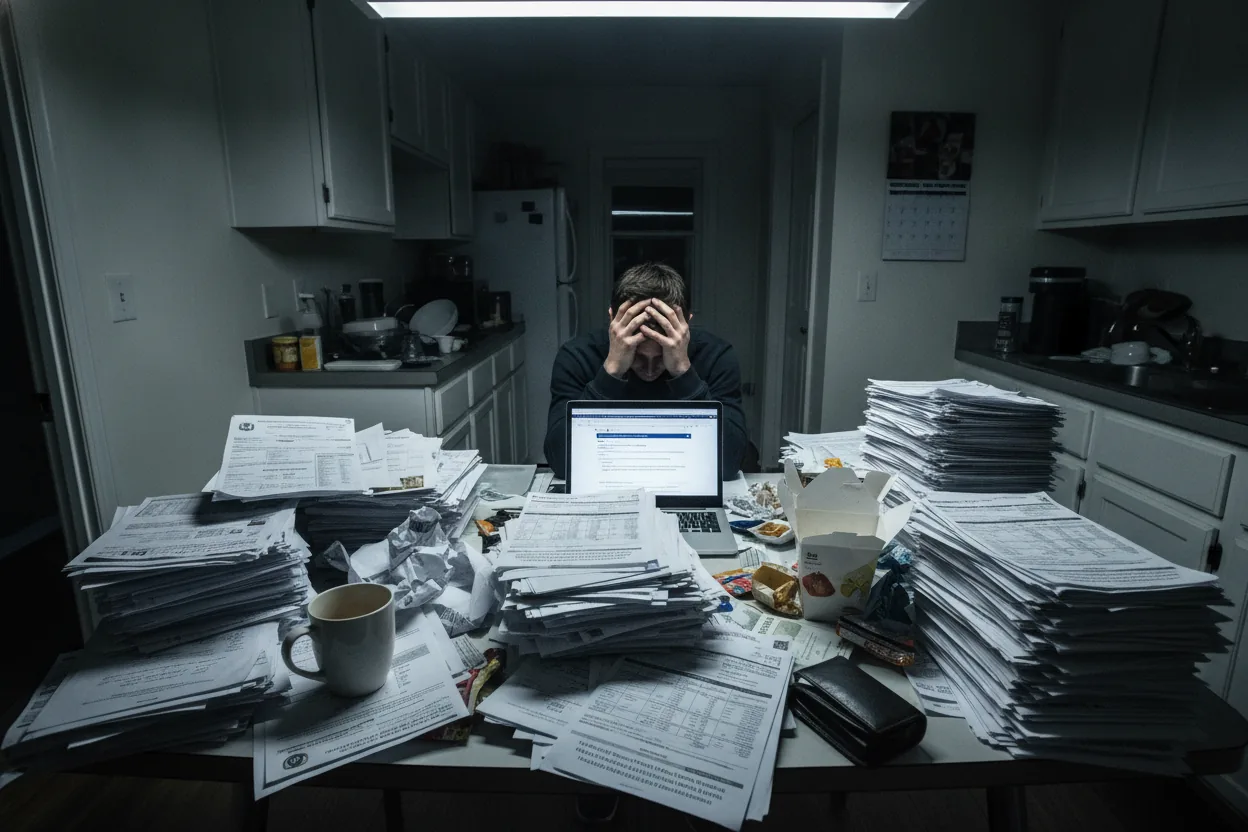
Federal courts are forcing the Department of Education to cancel student loans for at least 670,000 borrowers, and this is happening at the exact same moment student loan defaults have broken all previous records. An estimated 7 to 9 million borrowers now face wage garnishment and tax refund seizures they cannot escape without immediate action. The data tells a clear story about how a two-track student loan economy this fractured reshapes consumer spending, housing demand, and household credit over the next 18 months.
- Federal student loan balances average tens of thousands of dollars per borrower, with graduate and professional degree holders sometimes carrying over $100,000 individually
- Income-driven repayment plans cap monthly payments at a percentage of discretionary income, which creates a structural gap between required payments and accruing interest on high balances. That gap compounds fast.
- The federal government suspended payments and set interest to 0% from March 2020 through approximately late 2023, a payment pause spanning roughly 42 months
- Public Service Loan Forgiveness, established under the College Cost Reduction and Access Act of 2007, cancels remaining balances after 120 qualifying payments in government or nonprofit employment
- When borrowers default on federal student loans, the government can garnish wages, seize tax refunds, and withhold Social Security benefits without ever going to court
Student debt repayment competes directly with rent, car payments, and retirement contributions. That's why default rates function as a genuine leading indicator of household financial stress across the 22 to 45 demographic. For investors tracking consumer discretionary stocks, credit card delinquency trends, and housing demand, student loan repayment data is a real macroeconomic signal, not just a policy sideshow.
Record Defaults and Court-Ordered Forgiveness Are Reshaping Borrower Finances Right Now
Student loan defaults hit record highs in 2026, following the full expiration of COVID-era payment protections that ended in late 2023. CBS News and NewsNation both reported in July 2026 that the post-pandemic default surge has broken previous records, with millions of borrowers who paused payments for over three years now unable to resume them under current income conditions. The Department of Education simultaneously faces court-ordered forgiveness obligations affecting at least 670,000 borrowers across two separate legal actions.
- A federal court blocked the Department of Education from delaying loan cancellations for more than 170,000 borrowers, forcing immediate discharge of qualifying balances under an existing forgiveness program
- Under a separate settlement reported by Forbes, the Department of Education must cancel student loans for approximately 500,000 borrowers
- The combined court-ordered discharges represent an estimated $20 billion or more in federal balance sheet write-downs, fiscal exposure that adds to the deficit in whatever year those discharges are processed
- Borrowers exiting default through the Fresh Start program, launched by the Department of Education in 2023, regain access to income-driven repayment plans and federal aid eligibility. It's essentially a credit rehabilitation on-ramp.
- Default triggers federal tax refund seizures and wage garnishment, meaning the roughly 7 to 9 million borrowers estimated to be in default face direct income reductions on top of the underlying loan balance
The record default environment creates a measurable drag on consumer spending, particularly in the 25 to 40 age cohort that retailers, auto lenders, and mortgage originators depend on for volume growth. Borrowers in default cannot access new federal financial aid, which depresses community college and vocational enrollment at the margin, affecting workforce development pipelines in healthcare, skilled trades, and technology support roles. For the housing market, the damage is especially stubborn: a borrower in default carries a severely damaged credit profile that blocks mortgage qualification for years, even after the underlying loan is resolved.
The court-ordered discharges cut in the opposite direction. Those 670,000 borrowers freed from loan obligations gain immediate monthly cash flow, typically several hundred dollars per month per household. That spending tends to flow into housing, vehicles, and consumer goods rather than savings, given the age and income profile of most forgiveness recipients. Federal budget analysts score these discharges as spending increases in the year they are recorded, adding to near-term deficit figures even though they eliminate a long-term collection asset.
For borrowers navigating this environment right now, the priorities are clear. Borrowers approaching default should contact their loan servicer immediately to enroll in an income-driven repayment plan, which can set payments as low as $0 per month for qualifying low-income borrowers and stops the default clock. Borrowers already in default should investigate the Fresh Start program before the Department of Education closes that window. Borrowers covered by the two court orders should monitor official Department of Education communications for discharge timelines rather than waiting passively, given the history of administrative delays the courts have already penalized once.
The macro picture for the next 12 to 18 months is a two-track student loan economy: a large cohort of defaulting borrowers contracting spending and damaging credit markets, offset partially by a smaller cohort receiving discharges and releasing pent-up consumer demand. The default wave is larger in dollar terms than the discharge wave, so the aggregate consumer spending impact stays a modest headwind rather than a tailwind. Borrowers holding federal loans who are not yet in default actually sit in the strongest position here. The repayment infrastructure exists to keep them current at minimal monthly cost, the legal environment keeps expanding forgiveness pathways for qualifying borrowers, and the clear pattern is that engagement beats avoidance at every turn.